
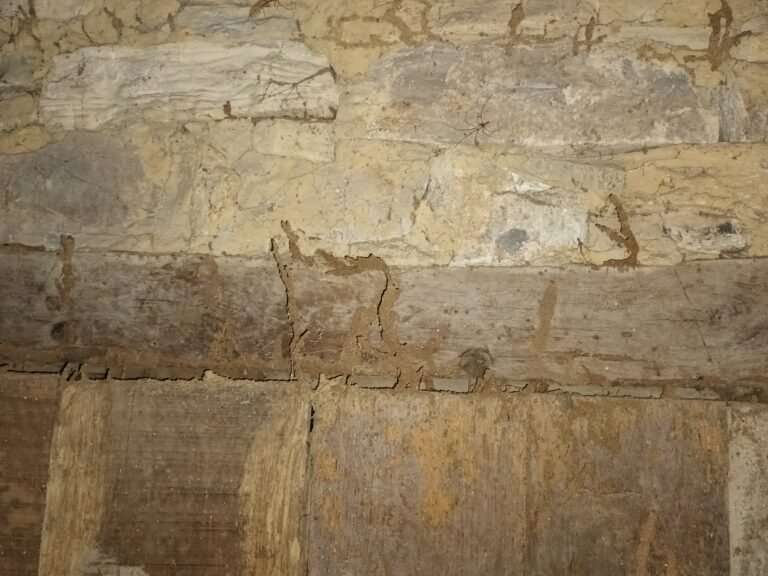
Termite regulations in France are based primarily on prefectural decrees. When termite infestations are identified in one or more municipalities, these decrees define the areas that are infested or likely to become infested in the near future. This zoning may entail specific obligations, particularly when selling real estate. Understanding how it works helps you determine whether a property is located within an affected area and which rules may apply.
Key points to remember
- A prefectural termite ordinance designates areas that are infested or likely to become infested in the near future when termite infestations have been identified
- It refers to a specific area and does not mean that every building within that area is infested
- When selling a building located in a designated area, a report on the presence of termites must be provided
- The order, on its own, does not provide information about a building’s condition and does not automatically require corrective action
- Zoning regulations may change; therefore, you should consult the applicable ordinance in its current version
What is a prefectoral termite decree?
A local administrative decision
A prefectural termite order is an official decision issued by the prefect of a department.
When termite infestations are identified, it legally delineates the areas that are infested or likely to become infested in the near future. It may apply to:
- an entire town
- several municipalities
- or specific areas within a department
To learn more about this topic, see the article published by the Public Service on this subject: Termites in the Home
Regulatory zoning, not evidence of an infestation
The classification of an area does not mean that all buildings within it are infested. The order defines a territorial perimeter based on identified outbreaks; it does not constitute an individual assessment of the situation in each dwelling.
Why is this distinction important?
A residence located in a designated municipality is not necessarily infested. Conversely, a building may have termites even before a designation is issued for that area. This distinction explains why administrative designation and termite inspections serve two different purposes: one organizes prevention efforts at the regional level, while the other assesses the condition of a specific property.
Prefectural Order on Termites: Everything You Need to Know at a Glance
| Question | Answer |
| Who issues the order? | The prefect of the relevant department. |
| What is it used for? | To officially recognize a termite risk in a specific area. |
| Does this apply to all buildings? | No. It applies to a specific area, not a particular residence. |
| Does it automatically trigger a treatment? | No. The prefectural order does not, on its own, require treatment. However, a separate municipal ordinance may require a termite inspection and preventive or eradication measures. |
| Can he improve? | Yes. An ordinance may be amended, expanded, or replaced depending on changes in the risk. |
What is the legal basis for the prefectural decrees regarding termites?
The Building and Housing Code
Prefectural decrees on termites are part of the broader framework of termite regulations in France, primarily defined by the Building and Housing Code. This legal framework aims to:
- protect the building structure
- inform buyers
- to regulate the obligations associated with real estate transactions
To understand the connection between regulations and inspections, see Termite Inspection: Definition, Legal Requirements, and Differences from a Pest Inspection Report.
To find out in which areas these regulations actually apply, see also Termite-Prone Areas: How Are They Defined in France?
An Approach to Collective Prevention
The regulations take a territorial approach. Termites move through the soil and can spread from one building to another. The goal is therefore to:
- structure prevention efforts
- limit the spread
- hold property owners accountable
Key takeaways
The prefectural order primarily protects the public interest. Its purpose is not to identify infested buildings, but to limit the spread of termites throughout a given area by informing property owners and establishing certain requirements.
How is a municipality classified as a termite-infested area?
What factors does the prefect base his decision on?
The Building and Housing Code does not provide an exhaustive list of the technical criteria used to establish zoning. However, it does establish the legal principle: when termite infestations are identified in one or more municipalities, the prefect, upon recommendation or after consultation with the municipal councils concerned, delineates the areas that are infested or likely to become infested in the near future.
Can an executive order change over time?
A prefectural order may:
- be modified
- to be replaced
- be repealed
Zoning may therefore vary depending on local conditions.
To view the available regional information, see our map of termites in France.
What obligations can an executive order trigger?
When selling a building located in an area designated by prefectural order, a mandatory termite inspection must be included in the technical inspection report.
It must be:
- completed before signing
- attached to the Technical Assessment Report; to learn more about the DDT, click here
- valid at the time of the transaction
Registration with the city hall: a requirement separate from zoning
The discovery of termites in a building, whether constructed or not, must be reported to city hall. This requirement does not depend on the prior existence of a prefectural order: it is the responsibility of the occupant or, if there is no occupant, the owner. For the common areas of a condominium, the responsibility falls on the condominium association. The report must be filed within one month of the discovery.
Specific Rules for Demolition
In the event of the total or partial demolition of a building located in an area designated by prefectural order, wood and materials contaminated by termites must be incinerated on site or treated before being transported if on-site incineration is not possible. The person who carried out these operations must then report them to city hall.
Prefectural Order and Termite Inspection: Don’t Confuse the Two
The Order: Territorial Regulatory Framework
The prefectural order establishes a regional legal framework. It does not apply to a specific building, but rather to a geographic area identified as being at risk of termite infestation.
Specifically, it:
- officially defines the affected area (entire municipality or specific sector)
- triggers certain regulatory obligations, particularly in the event of a sale
- has certain regulatory consequences related to zoning, particularly in the event of the sale or demolition of a building containing contaminated materials
- serves as an administrative reference for notaries, local governments, and diagnostic professionals
It therefore establishes a legal framework applicable to all properties located within the defined area, without making any assumptions about their actual condition.
The Diagnosis: Individual Technical Assessment
It assesses whether termites are actually present in a specific property. The ordinance establishes the legal framework. The inspection determines the actual situation.
To learn how to assess a potentially infested home in practice, see Termites in Your Home: How to Tell If Your Home Is Infested.
How can you tell if your home is affected?
Administrative Review
You can:
- view the decrees published by the prefecture
- contact city hall
- view official information and check zoning using the map
Technical Inspection
Beyond administrative zoning, assessing a building’s condition requires a tailored evaluation. If there is any suspicion, a Sentri Tech Authorized Applicator can examine the observed signs and assess the situation to determine whether treatment is necessary. To find the professional nearest you, visit our network of Sentri Tech Authorized Applicators.
Does the prefectural order automatically require treatment?
No, not always
The existence of a prefectural termite ordinance in a municipality does not mean that all buildings must be treated. The ordinance:
- officially recognizes a territorial risk
- triggers certain regulatory obligations (particularly in the event of a sale)
- provides a framework for risk management at the collective level
However, it does not constitute proof of an infestation in a specific property. A building located in a designated area may show no signs of an active infestation.
Treatment depends on a technical assessment
Treatment is only warranted if the presence of termites is confirmed. This confirmation is based on:
- a termite inspection required by law (as part of a sale)
- technical expertise in cases of suspected incidents
- Identifying characteristic signs (tunnels, string-like structures, weakened wood)
The prefectural order, therefore, does not in and of itself trigger treatment of every building located in the area. A termite infestation may warrant curative treatment; furthermore, in areas designated by the city council, the mayor may require a termite inspection as well as preventive or eradication measures.
Why are prefectural decrees essential for the protection of real estate heritage?
Termites operate discreetly and gradually. Without a clear regulatory framework, their presence could go unrecognized until significant damage occurs. Prefectural ordinances play a key role in this prevention effort. They make it possible to:
- greater transparency in real estate sales, by requiring that the buyer be informed when the property is located in a designated area
- coordinated risk management at the local level, by harmonizing practices within a given area
- limiting the spread of contamination, particularly through rules governing contaminated materials during certain demolition projects
- anticipating structural damage by promoting early detection and incorporating termite risk into real estate projects
Beyond being an administrative requirement, the prefectural order serves as a tool for collective regulation. It helps ensure that the problem is not addressed solely on a case-by-case basis after significant damage has already occurred.
It thus forms the territorial foundation of France’s termite prevention policy, bringing together information, a legal framework, and the responsibilities of local stakeholders.
Can a prefectural order be repealed?
Yes. A prefectural decree may be amended, replaced, or repealed. It is therefore advisable to check with the relevant prefecture or city hall for the most up-to-date information.
Things to remember
- A prefectural order regarding termites designates areas that are infested or likely to become infested in the near future
- It applies to a specific area and does not mean that all buildings are infested
- In particular, it imposes a requirement to perform a diagnostic inspection when selling a building located within the applicable area
- It does not automatically require treatment
- Reporting the presence of termites to city hall is a requirement separate from zoning regulations