
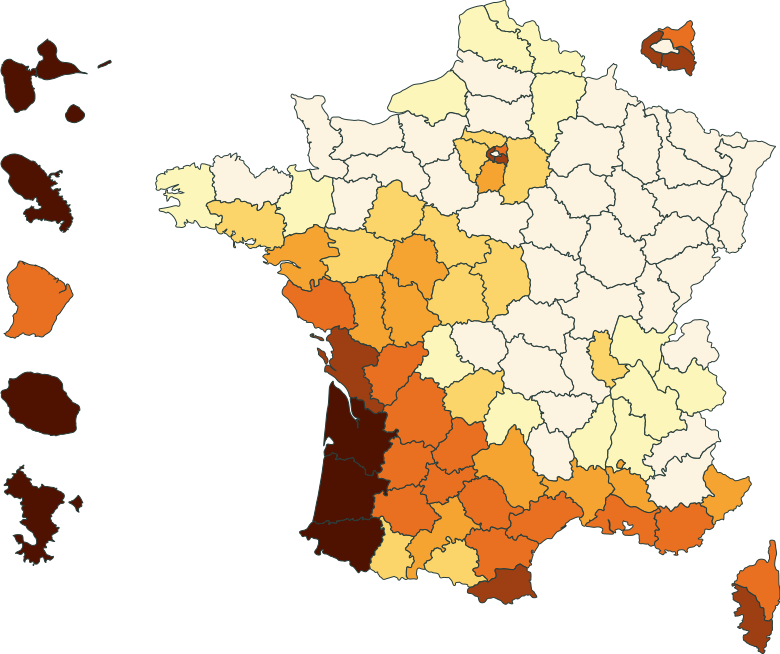
Termites are now found in many parts of France, both in mainland France and in the overseas departments and regions. The National Termite Observatory currently lists 55 infested departments in metropolitan France. However, this distribution is not uniform: certain regions have historically been affected, while outbreaks have also been observed in areas farther from their original ranges.
Understanding where termites are present, how their distribution may change, and which species are found in different regions provides a better understanding of the situation on a national scale.
Would you like to get an overview of termites, how they live, and the risks they pose? Check out our comprehensive guide to termites.
Key Points
- Termites are now found in many regions of France.
- The spread of infestations is also affecting certain urban areas.
- The species found in mainland France differ from those found in several overseas departments and regions (DROMs).
- Knowledge of their distribution is based on field observations, sightings, and information related to regulatory zoning.
Allies of the forest… that have become a threat to buildings
Termites are wood-eating insects that live in highly organized colonies. They have one primary goal: to seek out the cellulose found in trees, dead wood, and also in many of the materials used to build our homes, protect our property, or develop our land. Although they shy away from light, working deep within the wood and out of sight, termites are no longer confined to their forest habitats or their traditional ranges.
In their natural habitat, termites help break down dead wood and plant matter. The problem arises when they infest buildings: their ability to degrade cellulose-containing materials can then damage the wooden components of the building.
• To learn more about the life cycle of termites, check out our article on the subject.
Why are termites expanding into new territories?
Termites naturally live in the soil and seek out cellulose-rich materials to feed on. They generally spread slowly, but several factors can accelerate their spread.
The transport of construction materials, wood, excavated soil, or even rubble can sometimes lead to the accidental displacement of colonies from one area to another. Once established in a new, favorable environment, termites can gradually colonize neighboring buildings.
This trend helps explain why outbreaks can be identified in new areas and why regulatory zoning is likely to change over time.
To understand how these areas are defined, see our guide on termite-risk areas.
Are termites found everywhere in mainland France?
The presence of termites is not uniform across the entire metropolitan area. Some regions have been affected for many years, while others are gradually seeing new infestations emerge.
Knowledge of their distribution is based on various sources: observations and reports of infestations, field data, and maps of regulatory zoning areas. Not all of this information accurately reflects the same reality. To view regional observations, consult our map of termites in France.
Are termites also spreading in cities?
Yes. Termites are no longer limited to forested or rural areas.
Today, they are found in many urban areas, where they can infest everything from single-family homes to apartment buildings, public buildings, and historic landmarks.
This presence can be explained in particular by the continuity of the building stock, the exchange of materials, and the many sources of cellulose available in buildings.
Termites seek, above all, conditions favorable to their growth, regardless of whether their environment is rural or urban.
Termites in the French Overseas Departments and Regions: A Different Situation
The overseas departments and regions have a greater diversity of termite species than metropolitan France. The genera found vary by territory, particularly in Guadeloupe, Martinique, French Guiana, Réunion, and Mayotte. Tropical conditions thus give rise to a greater diversity of species capable of damaging buildings.
For areas where Sentri Tech Authorized Applicators are located, please see our dedicated information:
- Guadeloupe: https://sentritech-termites.fr/en/departements/971-guadeloupe-en/
- Martinique: https://sentritech-termites.fr/en/departements/972-martinique-en/
- Reunion Island: https://sentritech-termites.fr/en/departements/974-la-reunion-en/
You can also find all of our information about the overseas territories in our section: https://sentritech-termites.fr/en/regions/#drom
What species of termites are found in France?
The species present vary by region. In metropolitan France, six species of termites have been described: five subterranean species belonging to the genus Reticulitermes and one species of drywood termite, Kalotermes flavicollis. The main infestations in buildings are caused by subterranean termites ofthe genus Reticulitermes.
In the French overseas departments and regions (DROM), there is greater diversity. The National Termite Observatory documents, in particular, the genera Heterotermes, Coptotermes, and Nasutitermes, as well as several species of drywood termites, depending on the region.
• To learn about the species found in metropolitan France, see the FCBA report: https://termite.com.fr/les-especes/les-especes-metropolitaines/
• For species found in the French overseas departments and regions (DROM): https://termite.com.fr/les-especes/les-especes-des-dom-tom/
Some of the main species of termites documented by region
| Territory | Major Documented Termite Species |
| Mainland France | Reticulitermes spp.; Kalotermes flavicollis |
| Guadeloupe | Heterotermes, Nasutitermes, Coptotermes |
| Martinique | Heterotermes, Nasutitermes |
| French Guiana | Heterotermes, Nasutitermes, Coptotermes |
| Reunion Island | Coptotermes, in particular |
| Mayotte | Coptotermes, in particular |
This table provides general guidelines and does not constitute an exhaustive list of the species found in each territory.
A trend that calls for continued vigilance
The gradual expansion of the affected areas serves as a reminder that the risk of termite infestation changes over time. A municipality that is currently at low risk may, in the future, be subject to a prefectural order if new infestations are detected.
This trend calls for regular monitoring—especially when planning a purchase, sale, or construction project—as well as a thorough understanding of the local situation.
Understanding this progression also makes it easier to anticipate the preventive measures and requirements that may apply in different regions.
A solution tailored to the species found in France and the overseas departments and regions (DROM)
The Sentri Tech process is carried out by applicators who have been specifically trained in this method.
The cellulose-based substrate used by Sentri Tech is certified for use:
- in metropolitan France, on subterranean termites of the genus Reticulitermes
- in Guadeloupe and Martinique, on Heterotermes spp. and Nasutitermes spp.
- in French Guiana, on Heterotermes spp. and Coptotermes spp.
- in Réunion, on Coptotermes spp.
This treatment is effective against the main species of termites found in areas where the method is authorized.
Are you looking for a professional near you? Click here.
To learn more
To learn more about the different species of termites found in France, you can consult the FCBA’s resources, which serve as a leading reference on the subject.
• Species found in metropolitan France : https://termite.com.fr/les-especes/les-especes-metropolitaines/
• Species found in the French overseas departments and regions (DROM ): https://termite.com.fr/les-especes/les-especes-des-dom-tom/
Frequently asked questions
Are termites found throughout France?
No. Their distribution varies by region. Some regions have been affected for a long time, while others are gradually seeing new outbreaks emerge.
Are the species the same in mainland France and in the overseas departments and regions (DROM)?
No. In metropolitan France, five species of subterranean termites of the genus Reticulitermes have been described, as well as the drywood termite Kalotermes flavicollis. In the overseas departments and regions (DROM), there is greater diversity, including the genera Heterotermes, Nasutitermes, and Coptotermes, depending on the territory.
Do termites live only in forests?
No. They can also colonize urban areas and infest homes, apartment buildings, public buildings, or street trees when they find conditions favorable to their growth.
Why do termites expand into new territories?
This spread is the result of both their natural growth and factors related to human activities, such as the transport of materials, timber, or debris, which can contribute to their spread.
Where can I find reliable information about termite species?
The FCBA provides reference materials on the species found in mainland France and the overseas departments and regions (DROM), which are regularly used by industry professionals.
Overview of Termite Occurrence in France
- Termites have now been documented in many metropolitan departments as well as in the overseas departments and regions (DROM).
- The species found vary by region.
- Our understanding of their distribution evolves as field observations are made and available information is updated.
- The FCBA’s resources help deepen our understanding of the various species.
- If you suspect an infestation, it is recommended that you contact a qualified professional.