
Questions fréquentes liées aux termites et à la méthode Sentri Tech
Invisible mais redoutable, la menace termite s’étend sur l’ensemble du territoire français. Que vous soyez concerné par un arrêté préfectoral ou non, nul n’est aujourd’hui à l’abri. Ces insectes xylophages progressent silencieusement, détruisent le bois de l’intérieur, affaiblissent les structures et menacent la valeur de votre patrimoine. Prévention, diagnostic, traitement curatif, obligations légales : découvrez toutes les réponses essentielles sur la présence des termites en France et les solutions professionnelles pour s’en protéger durablement.
How to identify the signs of termite infestation?
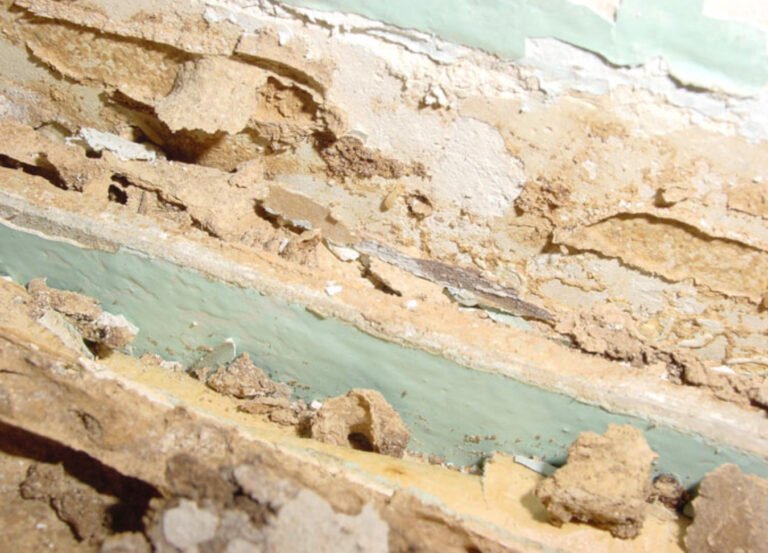
Knowing how to recognize the signs of a termite infestation is the first step in protecting your property. Common signs include the presence of galleries in the wood, fallen termite wings, sawdust-like droppings and visible damage to wooden structures. If you notice any of these signs, it’s imperative to act quickly.
How to contact a termite control specialist in Val-d’Oise (95)?
To find an anti-termite treatment specialist in the Val-d’Oise department, click here
How can I contact a termite control specialist in the Oise département (60)?
To find an anti-termite treatment specialist in the Oise department, click here
How can I contact a termite control specialist in the Pyrénées-Orientales (66) department?
To find an anti-termite treatment specialist in the Pyrénées- Orientales department, click here
How can I contact a termite control specialist in the Orne département (61)?
To find an anti-termite treatment specialist in the Orne department, click here
How can I contact a termite control specialist in the Haut-Rhin département (68)?
To find an anti-termite treatment specialist in the Haut-Rhin department, click here
How can I contact a termite control specialist in the Pas-de-Calais département (62)?
To find a specialist in termite control in the Pas-de-Calais department, click here
How can I contact a termite control specialist in the Rhône department (69)?
To find an anti-termite treatment specialist in the Rhône department, click here
How to contact a termite control specialist in Pyrénées-Atlantiques (64)?
To find an anti-termite treatment specialist in the Pyrénées-Atlantiques department, click here
How can I contact a termite control specialist in the Sarthe department (72)?
To find an anti-termite treatment specialist in the Sarthe department, click here
How can I contact a termite control specialist in the Hautes-Pyrénées (65) department?
To find an anti-termite treatment specialist in the Hautes-Pyrénées department, click here
How can I contact a termite control specialist in Paris (75)?
To find an anti-termite treatment specialist in Paris, click here
How to contact a termite control specialist in Tarn-et-Garonne (82)?
To find an anti-termite treatment specialist in the Tarn-et-Garonne department, click here
How can I contact a termite control specialist in the Seine-Maritime department (76)?
To find a specialist in termite control in the Seine-Maritime department, click here
How can I contact a termite control specialist in the Var department (83)?
To find an anti-termite treatment specialist in the Var department, click here
How to contact a termite control specialist in Seine-et-Marne (77)?
To find a termite treatment specialist in the Seine-et-Marne department, click here
How can I contact a termite control specialist in the Vaucluse département (84)?
To find an anti-termite treatment specialist in the Vaucluse department, click here
How can I contact a termite control specialist in the Yvelines département (78)?
To find an anti-termite treatment specialist in the Yvelines department, click here
How can I contact a termite control specialist in the Vendée (85)?
To find an anti-termite treatment specialist in the Vendée department, click here
How can I contact a termite control specialist in the Vienne département (86)?
To find an anti-termite treatment specialist in the Vienne department, click here
How can I contact a termite control specialist in the Deux-Sèvres département (79)?
To find an anti-termite treatment specialist in the Deux-Sèvres department, click here
How can I contact a termite control specialist in the Tarn département (81)?
To find an anti-termite treatment specialist in the Tarn department, click here
How can I contact a termite control specialist in the Haute-Vienne département (87)?
To find a termite control specialist in the Haute-Vienne department, click here
How do I contact a termite control specialist in Essonne (91)?
To find a specialist in termite control in Essonne, click here
How can I contact a termite control specialist in the Hauts-de-Seine department (92)?
To find a termite control specialist in the Hauts-de-Seine department, click here
How can I contact a termite control specialist in Seine-Saint-Denis (93)?
To find a specialist in termite control in Seine-Saint-Denis, click here
How to contact a termite control specialist in Val-de-Marne (94)?
To find a termite control specialist in the Val-de-Marne department, click here
How can I contact a termite control specialist in the Nièvre département (58)?
To find an anti-termite treatment specialist in the Nièvre department, click here
How to contact a termite control specialist in Lot-et-Garonne (47)?
To find an anti-termite treatment specialist in the Lot-et-Garonne department, click here
How can I contact a termite control specialist in Morbihan (56)?
To find an anti-termite treatment specialist in the Morbihan department, click here
How can I contact a termite control specialist in the Loiret département (45)?
To find an anti-termite treatment specialist in the Loiret department, click here
How can I contact a termite control specialist in the Mayenne department (53)?
To find an anti-termite treatment specialist in the Mayenne department, click here
How can I contact a termite control specialist in Loire-Atlantique (44)?
To find a specialist in termite control in the Loire-Atlantique region, click here
How to contact a termite control specialist in Loir-et-Cher (41)?
To find an anti-termite treatment specialist in the Loir-et-Cher department, click here
How can I contact a termite control specialist in Maine-et-Loire (49)?
To find a specialist in termite control in Maine-et-Loire, click here
How can I contact a termite control specialist in the Landes département (40)?
To find an anti-termite treatment specialist in the Landes department, click here
How can I contact a termite control specialist in Lozère (48)?
To find an anti-termite treatment specialist in the Lozère department, click here
How to contact a termite control specialist in Isère (38)?
To find a specialist in termite control in Isère, click here
How do I contact a termite control specialist in Gironde (33)?
To find an anti-termite treatment specialist in the Gironde department, click here
How do I contact a termite control specialist in the Indre-et-Loire département (37)?
To find a specialist in termite control in the Indre-et-Loire department, click here
How to contact a termite control specialist in the Gers department (32)?
To find an anti-termite treatment specialist in the Gers department, click here
How to contact a termite control specialist in Haute-Garonne (31)?
To find a termite treatment specialist in the Haute-Garonne department, click here
How can I contact a termite control specialist in the Indre département (36)?
To find a specialist in termite control in the Indre department, click here
How can I contact a termite control specialist in the Gard département (30)?
To find an anti-termite treatment specialist in the Gard department, click here
How to contact a termite control specialist in Ille-et-Vilaine (35)?
To find a specialist in termite control in the Ille-et-Vilaine department, click here
How can I contact a termite control specialist in the Drôme (26) department?
To find a termite control specialist in the Drôme department, click here
How can I contact a termite control specialist in the Hérault department (34)?
To find a specialist in termite control in the Hérault department, click here
How can I contact a termite control specialist in the Cher département (18)?
To find an anti-termite treatment specialist in the Cher department, click here
How can I contact a termite control specialist in the Creuse département (23)?
To find a specialist in termite control in the Creuse department, click here
How can I contact a termite control specialist in the Dordogne (24)?
To find a specialist in termite control in the Dordogne, click here
How can I contact a termite control specialist in the Charente-Maritime department (17)?
To find a specialist in termite control in the Charente-Maritime department, click here
How can I contact a termite control specialist in Haute-Corse (2B)?
To find an anti-termite treatment specialist in the Haute-Corse department, click here
How to contact a termite control specialist in Charente (16)?
To find an anti-termite treatment specialist in the Charente department, click here
How can I contact a termite control specialist in Corse-du-Sud (2A)?
To find an anti-termite treatment specialist in Corse-du-Sud, click here
How can I contact a termite control specialist in the Cantal département (15)?
To find an anti-termite treatment specialist in the Cantal department, click here
How to contact a termite control specialist in Corrèze (19)?
To find an anti-termite treatment specialist in the Corrèze department, click here
How can I contact a termite control specialist in the Bouches-du-Rhône (13) department?
To find a specialist in termite control in the Bouches-du-Rhône department, click here
How can I contact a termite control specialist in the Hautes-Alpes (05) department?
To find an anti-termite treatment specialist in the Hautes-Alpes department, click here
How can I contact a termite control specialist in Aveyron (12)?
To find a specialist in termite control in Aveyron, click here
How to contact a termite control specialist in Alpes-de-Haute-Provence (04)?
To find an anti-termite treatment specialist in the Alpes-de-Haute-Provence department, click here
How can I contact a termite control specialist in the Aude department (11)?
To find a specialist in termite control in the Aude department, click here
Which Île-de-France départements are most affected to date?
Which Île-de-France départements are most affected to date?
Infestations are particularly notable in the following departments:
- Val-de-Marne (94): Alfortville, Nogent-sur-Marne, Créteil.
- Seine-Saint-Denis (93): Montreuil, Saint-Denis, Le Pré-Saint-Gervais.
- Hauts-de-Seine (92): Nanterre, Boulogne-Billancourt, Suresnes.
- Essonne (91): Corbeil-Essonnes, Massy, Savigny-sur-Orge.
- Seine-et-Marne (77): Melun, Meaux, Fontainebleau.
- Yvelines (78) : Versailles, Chatou, Le Chesnay.
But this distribution is evolving rapidly, which justifies vigilance throughout the region.
How to contact a termite control specialist in Ariège (09)?
To find a specialist in termite control in the Ariège department, click here
Do termites spread rapidly in urban environments?
Yes. Contrary to what you might think, urban density doesn’t hinder their advance. In Paris and the inner suburbs, and in all densely populated urban areas (Lyon, Bordeaux, Marseille, Toulouse, Montpellier, Nice, Nantes…), termites spread through basements, service shafts, crawl spaces and even underground networks. A colony in one building can quickly contaminate several neighboring buildings.
How to contact a termite control specialist in Ardèche (07)?
To find an anti-termite treatment specialist in the Ardèche department, click here
Why is termite vigilance stepped up around Paris?
The Paris conurbation concentrates a number of aggravating factors: intense logistical exchanges, re-use of contaminated materials, poorly controlled renovation sites, interconnected basements… All these factors favor the silent spread of termites, including in apartment buildings. Hence the importance of having a termite diagnosis carried out, even when there is no legal obligation to do so, as soon as the first doubts arise.
How to contact a termite control specialist in Alpes-Maritimes (06)?
To find an anti-termite treatment specialist in the Alpes-Maritimes department, click here
Is there any legislation governing the reporting of termite infestations?
YES. French legislation imposes certain obligations on private individuals and professionals with regard to termites. The rules vary according to geographical zone, and are set out in prefectoral decrees.
Mandatory declaration of infestation
In accordance with Article L133-4 of the French Construction and Housing Code, any owner of a property infested by termites must declare the presence of these insects to the local town hall. This declaration must be made within a short time of the discovery of the infestation.
The declaration enables local authorities to monitor and coordinate termite control measures in a given area. The aim is to prevent the spread of these destructive insects, which can cause major structural damage.
Areas declared at risk
Prefects can define certain areas by decree as “contaminated zones” for termites. In these zones, additional obligations apply, including mandatory termite diagnostics when selling property.
Mandatory termite diagnosis when selling
When a property is located in a zone delimited by prefectoral decree, a termite diagnosis is mandatory prior to sale. This diagnosis must be carried out by a certified professional and is valid for six months. It informs the buyer of the presence or absence of termites in the property.
Work obligations
If termites are discovered, the owner may be required to carry out treatment work to eliminate the infestation and protect the structure of the property. In certain cases, the mayor’s office may impose emergency measures.
Sanctions
Failure to comply with the declaration or termite diagnosis obligation can result in administrative and legal penalties, particularly in the event of a dispute when the property is sold.
The aim of these provisions is to protect real estate assets and limit the spread of termites throughout the country.
What types of buildings are most vulnerable to termites in the Paris Region?
Older buildings, especially those built before the 1980s, are most at risk. Wooden floors, traditional frameworks, skirting boards, light partitions or poorly ventilated basements are frequent points of entry. But even in recent construction, elements such as formwork or site pallets can be vectors of contamination.
Do I have to leave my home during the Sentri Tech treatment?
No, the major advantage of Sentri tech treatment is that it’s non-invasive. You can continue to live normally in your own home, without having to move.
Are termites really active in the Paris Region despite the continental climate?
Yes, termites are on the rise. Contrary to popular belief, the climate in the Paris region – although drier than in the South-West – does not prevent termites from establishing themselves. Their presence has now been confirmed in several departments in the Paris region, notably in Hauts-de-Seine, YvelinesVal-de-Marne, Seine-Saint-Denis and Essonnewith frequent reports in urban areas such as Boulogne-Billancourt, Vincennes and Évry.
Why do termites prefer damp wood?
Damp wood is easier for termites to burrow, and provides them with a better food source.
Is Sarthe affected by the termite risk?
Since the prefectoral decree issued on December 15, 2025, all communes in the Sarthe region are now considered to be affected or likely to be affected in the short term by the termite risk. The main aim of this decision is to provide a framework for the detection, prevention and control of these insects, which can cause considerable damage to buildings.
In concrete terms, this decree does not mean that all homes are infested, but that increased vigilance is now required throughout the Sarthe region. It is part of a preventive and anticipatory approach, to avoid a silent spread of the phenomenon.
For private customers, there are several points to bear in mind:
- in the event of the sale of a property, certain information obligations may apply depending on the situation of the property;
- any suspicious sign (weakening wood, galleries, subsidence, unusual marks) should lead to a serious diagnosis;
- A declaration to the town hall may be required if termites are found to be present, in accordance with the regulatory framework in force.
In this context, a termite diagnosis carried out by a specialized professional enables us to accurately assess the situation and, where necessary, define appropriate solutions, whether preventive or curative. To contact a termite control professional in Sarthe (72), click here.
The prefectoral decree is therefore less a warning than a collective protection tool, designed to preserve buildings and better inform owners, buyers and local authorities about the termite risk in the Sarthe region.
Do termites only attack wood?
NO. Termites not only attack wood, they also feed on cellulose, a substance found in a variety of wood-based materials. In addition to wood itself, termites can also attack other materials containing cellulose, such as cardboard, paper and other paper products.
This ability to feed on cellulose makes them capable of causing damage to a wide range of objects and structures in our homes. For example, books, partitions, wallpaper and building materials such as the vapour barrier on drywall can be damaged by termite infestation.
What’s more, in their relentless quest for food, termites can also damage materials they don’t consume directly. For example, by burrowing through walls and structures, they can degrade materials such as plaster, polystyrene and even electrical sheathing, which can lead to structural damage and electrical safety risks.
In summary, although their diet focuses mainly on cellulose, termites can cause damage to a variety of materials in our homes, which underlines the importance of taking preventive measures against termite infestations.
Who pays for anti-termite treatment in a condominium?
The question of financing a termite treatment in a condominium can be a complex one, as it involves legal concepts, the delimitation of common and private areas, and the management rules imposed by the syndic. Here’s a complete analysis to help you better understand the obligations of the various parties and how costs are shared.
Legal requirements for termite control
In France, certain areas are classified by prefectoral decree as termite-infested. In these zones, property owners, including co-ownerships, are obliged to monitor for the presence of termites, and to take the necessary measures in the event of detection. In the event of the sale of a condominium lot, a termite diagnosis is mandatory if the property is located in a termite-infested zone.
Sharing responsibilities in condominiums
The distinction between common areas and private areas is essential in determining who should bear the cost of treatment.
- Common areas :
- Load-bearing walls, framework, foundations, shared cellars, courtyards and gardens are considered common parts.
- If termites are detected in these areas, all co-owners are responsible for treatment, in proportion to their share of the property.
- Private portions :
- Private lots (apartments, private cellars, garages) are the direct responsibility of each co-owner.
- If the termites are only present in a private lot, the co-owner will have to pay for the entire treatment.
Specific cases and condominium bylaw rules
The condominium bylaws may include specific provisions for pest management, including termites. In some cases, for reasons of structural safety, they may require collective management.
Termite detection procedure
- Notifying the syndic : if a co-owner discovers the presence of termites, he or she must immediately inform the syndic.
- Inspection by a professional : the property manager will call in an expert to assess the extent of the infestation.
- General meeting vote : if the treatment concerns common areas, approval by the co-owners will be required at a general meeting.
Breakdown of costs
The cost of the anti-termite treatment is broken down as follows:
- Common areas : costs are apportioned according to each co-owner’s “tantièmes”.
- Private portions : the co-owner concerned bears the costs alone.
In the event of disagreement over distribution, you can call on a mediator or, as a last resort, take your case to court.
Prevention and advice
To limit the risk of infestation:
- Regular inspection : periodic inspection by a professional is recommended.
- Preventive treatments : installing monitoring systems like those offered by Sentri Tech can be an effective solution.
- Raising awareness among co-owners : informing residents about the signs of infestation enables early detection.
Things to remember
Managing termite control in condominiums relies on good communication between co-owners and effective coordination with the managing agent. Early detection and swift action preserve the integrity of the building, while limiting costs for everyone involved.
- Common areas :
Do termites eat all kinds of wood, living or dead?
YES. Termites are known to consume a wide variety of wood, both living and dead. However, this statement needs to be qualified, as certain factors can influence their food preference.
In fact, some healthy, living trees can be avoided by termites because they produce repellent or toxic molecules. These chemicals deter termites from attacking these trees. However, a tree weakened by heat stress or disease, for example, may become an easier target for a termite colony.
What’s more, termites tend to prefer certain types of wood more than others. For example, they may find it easier to perforate softwood beams than harder woods such as chestnut or oak, which offer greater resistance to their mandibles. So, while termites have the ability to consume a variety of woods, their food choices may be influenced by the nature of the wood and its state of health.
What to do when reselling a termite-infested house?
A termite diagnosis is mandatory when selling a property located in a risk zone. Proof of treatment may be required to secure the transaction.
Are termites active all year round?
Termites can remain active all year round, although their activity is most visible during the warmer, wetter seasons.
Are all woods equally prized by termites?
No, termites have preferences based on the wood’s chemical composition and moisture content. They prefer soft, cellulose-rich woods such as pine and fir. On the other hand, certain hardwoods and softwoods, as well as chemically-treated wood, are less susceptible to attack.
Do termites only move at night?
NO. Not only do termites move around at night, they are also active during the day. However, their mode of movement differs from that of other insects. Rather than moving in the open, termites use galleries or tunnels to travel between their nest and food source. These galleries offer protection from potential predators and the elements, as well as stable environmental conditions.
Termites’ preference for moving underground is also linked to their sensitivity to draughts. These xylophagous insects avoid draughts as they can dry out their delicate, fragile bodies. Consequently, although they can be active at any time of day, they prefer to move subterranean to minimize the risks associated with exposure to the outside elements.
Why is wood an ideal resource for termites?
There are several reasons why termites prefer wood:
- Abundant availability : wood is found everywhere in nature and in human constructions (frameworks, furniture, flooring, etc.).
- Stable energy source : cellulose provides a sustainable energy source for termite colonies.
- Protection: wood allows termites to dig galleries while being protected from predators and external weather conditions.
What’s the difference between termites and wood beetles?
Termites consume wood from the inside, leaving an intact surface, while capricorn beetles create visible galleries with sawdust.
Why do termites eat wood?
Because, for a termite, wood isn’t “a material”: it’s an energy larder.
Wood is rich in cellulose, a highly abundant plant fiber. Termites (especially the so-called “wood” and “subterranean” species) feed primarily on cellulose, which they find in wood… but also in cardboard, paper and certain plant-based boards or insulation.
They don’t digest cellulose on their own: their real “secret weapon” is the micro-organisms in their digestive tract (bacteria/protozoa, depending on the species) that break down the cellulose into assimilable nutrients.
Wood also serves as shelter: inside, they are protected from light and desiccation. Hence their implacable logic: feed without exposing themselves, by digging galleries and sometimes leaving a thin film on the surface.
Simply put: they eat wood out of biological necessity (energy) and strategy (stealth + protection). And it’s precisely this combo that makes them so formidable in the built environment.
Consequences for human constructions
This attraction to wood makes termites a major threat to buildings. They can cause considerable damage by weakening by weakening load-bearing structures, sometimes without visible signs for long periods.
Prevention and solutions
To effectively protect your home against termites, it’s essential to reduce moisture sources, use treated wood or use monitoring systems such as Sentri Tech stations. These devices enable early detection and targeted intervention to prevent infestations.
This ability to digest cellulose makes termites important players in the natural ecosystem, but also dreaded pests in human constructions.
What other insects can be confused with termites?
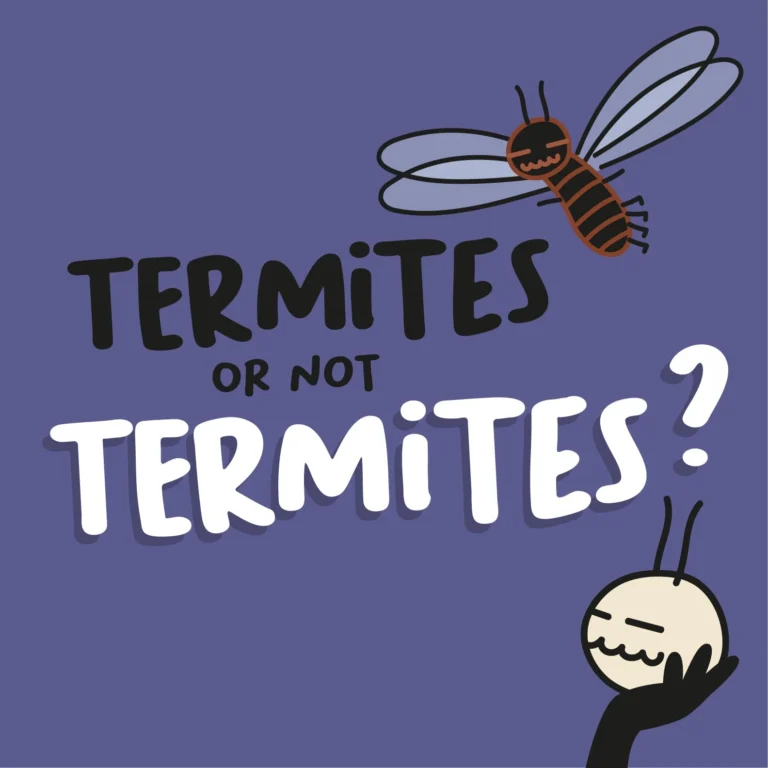
Termites are often confused with flying ants. Unlike ants, termites have straight antennae and wings of equal size.
How long do queen termites live?
The termite queen can live for up to 20 years, producing thousands of eggs a day, making eradication essential to preserve buildings.
What’s the difference between a termite infestation and a carpenter ant infestation?
Termites consume wood, which can weaken your structure, while carpenter ants dig galleries in the wood to establish their nests. Termites leave muddy galleries, while ants leave fine sawdust.
Do termites know how to swim?
NO. Termites cannot swim. Although they have specific abilities such as flying during the swarming period and digging to move or extract food, swimming is not one of them.
Termites generally need a certain amount of moisture to survive, which is why colonies are often located close to water sources. Moisture is essential to maintain the structural integrity of their nests and to enable them to function properly. However, although termites depend on moisture, they are not adapted to aquatic life and cannot swim.
« Termite », c’est féminin ?
NO. A termite is a common masculine noun for a white wood-boring insect whose colonies are made up of both males and females.
Are termites cousins of ants?
NO. Indeed, although termites and ants share certain similarities, they are not cousins in the biological sense. Their only notable resemblance lies in their relatively small size and social lifestyle. Taxonomically, however, they belong to different orders. Ants belong to the order Hymenoptera, while termites belong to the order Isoptera.
Despite this distinction, it’s common to hear termites sometimes referred to as “white ants”, but this is more a misuse of language than a precise scientific classification. In reality, termites and ants have distinct anatomies, social behaviors and reproductive strategies.
What should I do if I see termites in my garden?
It’s best to have your home inspected by a professional as soon as possible. Termites in the garden can easily migrate to the wooden structures of your home.
In France, is it the same termite as in Africa?
NO. Indeed, termites in France differ from their African counterparts in a number of ways, not least in their construction behavior and social organization. In France, termites are known to build underground termite mounds, hidden beneath the soil surface. These subterranean termite mounds offer protection from climatic variations and potential predators, while providing easy access to the organic matter they feed on.
In Africa, on the other hand, termites are famous for erecting monumental, cathedral-like termite mounds that rise well above ground level. These imposing structures can reach impressive heights and are the result of the termites’ complex collaboration and organization within their colony.
Another major distinction lies in the size of termites and the structure of their colonies. In Africa, termite queens can be remarkably large, whereas French colonies are generally made up of several breeding pairs, all of relatively small size. This difference can be attributed to a variety of factors, including the availability of food resources, climate and other environmental conditions specific to each region.
In summary, although termites share common traits across the globe, the species present in France and Africa have evolved to adapt to their respective environments, resulting in notable differences in their building behavior, social organization and other aspects of their biology.
Is it possible to identify an infestation without expert help?
Although there may be visible signs of termite infestation (hollow wood, tunnels), only a professional inspection can guarantee accurate detection. To find your nearest termite expert, click here.
Can I treat a termite infestation myself?
Home treatments are rarely effective. For long-lasting, complete eradication, it’s best to call on experts like Sentri Tech. To contact the one nearest you, click here.
How long does a termite live?
The lifespan of a worker termite is several years, while queens can live for several decades under optimal conditions.
Can I install Sentri Tech termite control stations myself?
NO, because these termite control stations contain the high-density cellulose carrier and are installed exclusively by SENTRI TECH Authorized Applicators.
How to recognize the different types of termites?
To identify the type of termite infesting a home, it’s crucial to call in a certified professional. Observation of their galleries, the structure of their nests and the damage they leave behind can often help to differentiate between these species.
How many types of termites are there in France?
In France, there are three main families of termites, each with distinct biological characteristics and behaviors. These xylophagous insects feed on the cellulose contained in wood, making them a major threat to wooden buildings and structures.
- Subterranean termites (Reticulitermes)
Subterranean termites are the most common and destructive in France. They live in the ground and build underground tunnels to reach wooden structures. Their ability to remain hidden makes them particularly difficult to detect. They prefer damp environments and are able to penetrate walls or foundations to reach infested areas.
Features :
- Average size 4 to 7 mm.
- Whitish color.
- Need constant humidity to survive.
- Infest mainly homes near wooded or damp areas.
Reticulitermes species can be found in the southwest, on the Atlantic coast and even in certain regions of northern France.
- Drywood termites (Kalotermitidae)
Drywood termites are less widespread than subterranean termites, but they remain a major threat. Unlike subterranean termites, they don’t need to live in contact with soil or a source of high humidity. They infest furniture, beams and frames directly.
Features :
- Size from 5 to 8 mm.
- Brown color.
- Able to live in dry woods without contact with the ground.
- Often infest antique furniture.
They are more localized, particularly in Mediterranean coastal areas.
- Arboreal termites (Nasutitermes)
Arboreal termites are extremely rare in France. They build their nests directly in trees or high structures, but occasionally migrate into buildings. They are mainly found in tropical regions, but some species are beginning to be observed as a result of climate change.
Features :
- Size varies according to species.
- High nests visible to the naked eye.
- Less destructive than subterranean termites.
Things to remember
The presence of several types of termites in France reinforces the need for prevention and rapid intervention. Sentri Tech offers tailored solutions, both curative and preventive, to combat these different species and effectively protect your property assets.
What to do if termites are present?
- Don’t move infested objects : this could spread termites elsewhere.
- Contact a professional Sentri Tech: a specialized company like Sentri Tech can assess the extent of the infestation and suggest a suitable treatment.
- Don’t try to treat alone : commercially available products are often not powerful enough to eradicate a colony.
How can I contact a termite control specialist in the Nord département (59)?
To find an anti-termite treatment specialist in the Nord department, click here
How can I contact a termite control specialist in the Lot department (46)?
To find an anti-termite treatment specialist in the Lot department, click here
What are the legal requirements for termite control in the Paris Region?
The presence of termites in the Paris region has led some prefectures to declare areas infested. When selling a property located in these zones, a termite diagnosis is mandatory. This diagnosis verifies the presence of these insects and informs potential buyers.
Why are termites spreading in the Paris region?
Several factors explain the growing presence of termites in this region:
- Transporting infested materials : moving contaminated wood, pallets and other materials encourages their spread.
- Dense urbanization : wooden structures in older buildings offer a favorable environment.
- Climate change : milder winters mean greater survival for termite colonies.
Complementary strategies: control and monitoring
After successful treatment, it is essential to implement long-term control and follow-up strategies. This involves regularly monitoring the property to detect any potential termite activity, as well as implementing ongoing preventative measures.
Which termite species are present in France?
Several species of termites are present in France, the most common being subterranean termites (Reticulitermes spp.) and drywood termites (Kalotermes flavicollis). Les termites souterrains creusent des galeries dans le sol et peuvent accéder aux structures en bois, tandis que les termites de bois sec infestent directement le bois sec sans nécessiter un contact avec le sol. Understanding the behavior of each species is crucial to implementing an appropriate control strategy.
How can you protect your property against termites?
Fighting termites in France and choosing the right treatment methods are essential to protecting your property. Whether you opt for preventive measures or dealing with an existing existing infestationprofessional expertise is a valuable asset. Acting quickly and effectively can preserve the structural integrity of your home and avoid the considerable repair costs associated with termite damage.
How do termites spread?
Termites spread mainly through swarming. Winged breeders fly away from their colony in the spring. Couples then form, and some settle near a hollow in the wood. These termites reproduce to form a new colony. But swarming isn’t the only way termites spread.
A termite colony can also develop through the transport of wood and plants, where contaminated soil can potentially be found. This soil is sometimes transported hundreds of kilometers away, and this is how another region can become contaminated by termites.What is the termite infestation status in my area?
Find out if drywood termites are present in your region and department.
What curative treatment is needed to eradicate termites?
If an infestation is already present, curative treatment is required. Options include the use of termiticides, baited traps and thermal methods. These approaches specifically target the termites present, eliminating the infestation and preventing further spread.
Are there any regions in France particularly hard hit by termites?
YES. Some regions of France are particularly vulnerable to termite infestation. However, it’s important to note that these xylophagous insects are gaining ground and gradually spreading throughout the country, even in previously unspoilt areas.
Regions historically affected
Traditionally, termites are found in regions with a mild, humid climate. The areas most affected are :
- The Atlantic facade: Nouvelle-Aquitaine, with departments such as Gironde, Landes and Charente-Maritime, is a historically infested region.
- South-West: Occitanie, including the departments of Gers, Haute-Garonne and Tarn.
- Provence-Alpes-Côte d’Azur: Termites are widespread in Bouches-du-Rhône, Var and Alpes-Maritimes.
- The Loire Valley: This region, with its many historic buildings, is also affected.
Expansion into new areas
With climate change and the intensification of human activities (particularly the transportation of wood and building materials), termites are spreading across the country. Some regions previously considered to be at low risk are now affected:
- Île-de-France: infestations are now being reported, particularly in dense urban areas.
- Burgundy-Franche-Comté: reports are increasing, particularly in wooded areas and near rivers.
- Hauts-de-France: although the climate is historically less favorable, cases of infestation have been detected.
How do you know if your region is at risk?
The prefectures publish prefectoral decrees delimiting contaminated zones. If you are located in one of these zones, preventive measures and termite diagnostics may be mandatory, particularly when selling property.
Whatever your location, we recommend you remain vigilant in the face of the growing termite threat. Calling in a professional to carry out a regular inspection can provide lasting protection for your property.
Should I call in a professional to combat termites?
Termite management often requires the intervention of qualified professionals. Specialized companies use advanced methods, such as Sentri Tech, which offer precise termite elimination while minimizing the impact on your immediate environment.
How long does an effective termite treatment last?
A Sentri Tech treatment is a long-term process: several months for the curative with active monitoring, and several years of protection for preventive. Regular monitoring is recommended to ensure long-term protection.
Where can you find termites in France today?
Wood termites are present in many French departments. Historically found in the South-West, the Atlantic seaboard and the Mediterranean, they are now making inroads into Burgundy, Ile-de-France and Hauts-de-France. To check whether your commune is located in a zone delimited by prefectoral decree, consult the maps provided by theNational Termite Observatory (ONT).
What’s the difference between curative and preventive anti-termite treatment?
The curative treatment intervenes when termites are present, with the installation of stations on the periphery AND inside the building. The preventive treatment concerns healthy buildings, with outdoor stations only, to prevent any intrusion.
How do you recognize the presence of termites in your home?
Visit signs that should alert you These include hollow-sounding wood, galleries in beams, blistering paint, insect wings on the floor, and mud tunnels on walls or foundations. Consult a licensed professional as soon as any of these symptoms appear.
Can I install termite traps myself?
No. Sentri Tech Sentri Tech devices are reserved for authorized applicators.. Installation, station monitoring and colony behavior analysis require professional expertise.
What are your obligations in the event of termite infestation?
Under article L133-1 of the French Construction and Housing Code, all property owners are required to declare the presence of termites to their local town hall. When selling a property located in a zone subject to a prefectoral decree, a termite diagnosis is mandatory.
When is the best time to treat your home against wood termites?
Termites are active all year round, but swarm in spring and summer. It’s best to think ahead: preventive preventive treatment can be implemented at any time..
Is termite diagnosis mandatory throughout France?
No. It is only required for sales in zones defined by prefectoral decree. These zones change regularly. To find out about local regulations, consult your local prefecture’s website.
How much does anti-termite treatment cost in France?
Rates vary according to the type of treatment (preventive or curative), the surface area to be protected, the accessibility of the building and the level of infestation. Only a personalized estimate will provide a precise quote.
Are termites visible to the naked eye?
Very rarely. These insects live hidden in wood, soil or walls. Their damage is damage or indirect traces (wings, sawdust, tunnels…).
Does global warming favor termites?
Yes, milder winters and persistent humidity enable colonies to survive and spread to areas previously spared. Climate change is one of the reasons why they are moving towards northern and eastern France.
What are the risks of not treating an infested house?
Major damage: weakened beams, collapsed floors, weakened partitions. In the long term, the very structure of the building may be compromised. Heavy, costly renovation work is then inevitable.
What is a prefectoral termite decree?
This is a local decree issued by the prefecture of a département or arrondissement. It makes termite diagnosis compulsory in certain zones, and imposes obligations in the event of proven presence.
Are termites a health hazard?
No, termites don’t bite and they don’t transmit disease. Their danger is exclusively structural and heritage-related.
What can I do if my commune is not in a risk zone?
Even without a prefectoral decree, vigilance is still required. A voluntary termite diagnosis can be carried out, particularly in the case of work or transactions. In case of doubt, a preventive solution is strongly recommended.
Who to contact for termite diagnosis and treatment in France?
Sentri Tech’s approved applicators operate throughout France. They provide diagnosis, personalized advice and the implementation of appropriate treatments. Follow this link to find your nearest professional.
Can you sell a house with termites?
Yes, as long as you inform the buyer via the termite diagnosis. If the property is located in a declared zone, the diagnosis must be less than six months old. Failing this, the sale may be cancelled or the seller held liable.
Are termites present in the Paris Region?
YES. Termites are a fact of life in the Paris region. Although this region was long considered immune to major infestations, the situation has changed in recent years. Due to factors such as the transportation of building materials, climate change and urban density, termites have gained ground even in this historically less affected area.
Areas most affected in Île-de-France
Termite infestations are particularly prevalent in the following departments:
- Paris (75) : old buildings, especially in historic districts, are vulnerable.
- Hauts-de-Seine (92) and Yvelines (78) : some communes, such as Boulogne-Billancourt and Nanterre in Hauts-de-Seine, and Versailles and Viroflay in Yvelines, have reported infestations.
- Seine-Saint-Denis (93) and Val-de-Marne (94): these departments are experiencing an upsurge in cases.
- Essonne (91) and Seine-et-Marne (77): with their more wooded areas, they are also affected.
Termites can spread discreetly through the subsoil, making their presence sometimes difficult to detect.
How do termites spread in France?
Mainly by swarming and transport of contaminated materials (wood, pallets, topsoil). This is why uninfested areas can quickly become infested.
What are the high-risk termite zones in 2025?
The areas most affected by termites in France are: Nouvelle-Aquitaine, Occitanie, PACA, Pays de la Loire, Centre-Val de Loire and certain parts of Ile-de-France. Official maps are updated regularly by prefectures and theObservatoire National Termite.
How do I know if I have termites in my home?
Detecting the presence of termites in a home is essential to limit the structural damage they can cause. These xylophagous insects feed mainly on wood, and can weaken framing, floors and furniture without you noticing right away. A careful inspection and a few clues can help you identify an infestation.
Visible signs of termite infestation
- Galleries and tunnels in wood : termites create internal tunnels to move around while remaining protected from air and light. On the surface, the wood may appear intact, but if you tap on it, you’ll hear a hollow sound.
- Presence of earthen cords : subterranean termites build mud tubes on walls, foundations or structures to keep out the light.
- Appearance of cracks in wood or walls : advanced infestation can lead to cracks as structures weaken.
- Crumbly wood : when you scrape a wood surface, if the wood falls away in thin strips, this may indicate termite damage.
- Presence of flying termites (swarms) : during certain periods of the year (usually spring), reproductive termites fly off to form new colonies. These winged termites look like little ants with wings.
- Detached wings : after a swarm, it’s common to find abandoned wings on windowsills or near light sources.
Checks in high-risk areas
To find out if your home is infested, inspect the following areas:
- Basements and foundations : subterranean termites often gain access to houses through the foundations.
- Frames : support beams are particularly vulnerable.
- Interior joinery : doors, windows and skirting boards may be damaged.
- Wooden furniture : examine legs and internal structures.
- Parquet floors : a warped or hollow-sounding floor can indicate infestation.
Distinguishing termites from other pests
It’s important not to confuse termites with carpenter ants. Here are a few differences:
- Termites have straight antennae, while ants have angled ones.
- Winged termites have four wings of equal size, while ants have front wings that are longer than their hind wings.
- The termites’ bodies are uniformly segmented, with no marked pruning.
Use of advanced detection techniques
If you suspect an infestation but can’t find proof, a professional can use :
- Thermal cameras : to detect heat differences caused by the presence of termites.
- Acoustic detectors : to pick up termite chewing noises.
- Sonar : to identify hidden galleries.
Things to remember
Prevention and vigilance are essential to protect your home against termites. Regular inspection of at-risk areas and prompt professional intervention in case of doubt can prevent considerable damage. With Sentri Tech’s monitoring and treatment solutions, you can effectively control these pests while protecting your property for the long term.
What conditions are favorable for termites in France?
Termites are xylophagous insects that thrive in favorable conditions, particularly those associated with humidity. In France, the southern regions, with their warmer and often more humid climates, offer ideal conditions for termite activity. However, it’s crucial to note that termites can be found all over the country, and no region today is immune to their threat.
In southern regions, termites can be more active and cause significant structural damage to buildings, starting with wooden structures. Higher temperatures and increased humidity favor their development and their ability to feed on the cellulose present in wood.
Nevertheless, termites can also be found in the more temperate regions of northern France. Even if conditions are not as favorable, they can still represent a threat, especially in environments where humidity is present, such as coastal areas.
So, to effectively combat the termite threat in France, it’s essential to adopt preventive measures, wherever you live. Regular inspections, preventive treatments and constant monitoring are essential to protect wooden structures from potential termite attack.
Why are termites invading more and more of France’s departments and regions?
Termites, xylophagous insects with a reputation for destroying wooden structures, are expanding at an alarming rate across France. Once confined to certain geographical areas, these devastating species are now invading departments that were previously relatively unscathed. This trend is the result of a combination of climatic, environmental, biological and human factors. In this article, we take an in-depth look at the reasons behind the termite boom, and the challenges it poses for homeowners and the authorities.
Climate change favors termite proliferation
Global warming is having a direct impact on the distribution of termites in France. Historically, termites were confined to warmer, wetter areas, such as the south-west and the Mediterranean coast. However, with rising average temperatures and more frequent rainfall, some of France’s usually colder and drier departments are now experiencing a climate more favorable to their development.
Termites, particularly subterranean termites, need warm, humid conditions to thrive. In recent decades, higher temperatures have enabled these insects to spread northwards, into regions previously less vulnerable to their attack. For example, departments such as Loire-Atlantique, Manche, and even certain areas of the Val-de-Loire, where termites used to be rare, are now experiencing increasingly frequent infestations.
Changes in farming practices and woodland management
Changes in agricultural practices and forest management have also contributed to the expansion of termites. The intensification of agriculture and changes in the management of forests and natural areas have disrupted local ecosystems. Forests, once well-maintained, are increasingly exposed to human intervention, which can lead to the proliferation of less protected woodland areas, favorable to termites.
In addition, the abandonment of certain rural areas and increasing urbanization have resulted in a tangle of natural and built elements where termites find ideal conditions to spread. The terms “peri-urban areas” and “degraded rural areas” are now frequently associated with termite-infested zones.
Transporting termite materials: a major vector of infestation
One of the key factors in the spread of termites in France is the transportation of contaminated wood and materials. Termites, especially subterranean species, can travel long distances underground. However, one of the main means of introducing new colonies remains the exchange and transportation of termite-infested timber, furniture or even recyclable materials.
The timber and building materials trade is a vector for the spread of termites, not only across the country, but also internationally. The introduction of termites into previously protected areas can occur when materials, such as pallets or boards, are transported from other regions or even countries where termites are already present. This phenomenon of unintentional introduction is one of the major causes of the rapid expansion of these insects into new territories.
Urbanization and new housing development
Rapid urbanization in rural and suburban areas also contributes to the proliferation of termites. Many new buildings are made of materials sensitive to termite attack, notably wood, which is used in structures, foundations and frameworks. These new constructions, often located in areas where termites are spreading, become a prime target for these insects.
What’s more, failure to take adequate precautions in terms of preventive treatment of wood in construction can allow termites to establish themselves rapidly. The practice of preventive treatment, which was more common in highly infested regions, is becoming increasingly necessary in departments previously free of this plague. Authorities and construction companies need to incorporate this dimension into their methods to prevent new areas from becoming ideal breeding grounds for termites.
The deterioration of control methods
Another factor in the spread of termites is the ineffectiveness of certain methods of combating the infestation. Over time, termites have developed a certain resistance to the chemicals traditionally used to eliminate them. As a result, conventional chemical treatments are no longer always effective in the long term, making termite control more complex.
New-generation treatments, such as Sentri Techmethod, are more targeted and offer a more precise response. However, the ineffectiveness of older methods in certain areas has allowed colonies to survive and multiply, accelerating their spread into areas where they were previously absent.
A belated awareness
Lack of awareness and vigilance about the threat of termites also contributes to their spread. Residents of certain regions recently invaded by termites have not always taken the necessary measures in time. Preventive diagnosis, often perceived as non-urgent, is not systematically carried out, leaving termites to spread undetected.
The time between the appearance of the first signs of infestation and actual detection by a professional can result in significant damage, giving termites time to colonize new structures. More widespread awareness and the implementation of preventive measures in recently invaded areas would be essential to slow down this expansion.
Adapting control and prevention practices
Faced with the advance of termites into previously unspoilt areas, a proactive approach is essential. Control methods must evolve in line with new climatic and geographical realities, and greater awareness must be raised to ensure a rapid and effective response to infestation.
The involvement of specialized professionals and the use of innovative solutions, such as Sentri Tech traps, offer promising prospects for combating infestation. Homeowners need to be aware of the growing risks and be prepared to protect their property from this ever-increasing threat.
Is there a link between the spread of termites in France and global warming?
In general, global warming can potentially influence the distribution of species, including termites. Changes in temperature and weather conditions can create environments that are more favorable for the survival and reproduction of certain termite species. Regions that were previously inhospitable to these insects could become more welcoming due to changing climatic conditions.
It’s important to note that the complex interactions between environmental factors, including climate, and termite biology make it difficult to accurately predict the impact of global warming on their spread. Specific scientific studies conducted by researchers in entomology and ecology are needed to assess these relationships in detail.
Which departments in France are contaminated by termites?
The termite threat is spreading across several departments and regions in France, requiring heightened vigilance on the part of homeowners. In addition to regions such as Provence-Alpes-Côte d’Azur with Var and Alpes-Maritimes, Occitanie with Hérault and Tarn, other parts of France are also affected. Termite departments can be found in Auvergne-Rhône-Alpes (Drôme, Rhône, Isère), Bretagne (Ille-et-Vilaine, Morbihan), Centre-Val de Loire (Cher, Indre, Loir-et-Cher, Indre-et-Loire) and Corse (Corse du Sud, Haute-Corse). Termites are also rife in Hauts-de-France (Pas-de-Calais), Île-de-France (Paris, Yvelines, Essonne, Hauts-de-Seine, Seine-Saint-Denis, Val-de-Marne, Val-d’Oise) and Normandy (Seine-Maritime). Historically highly infested with termites, the Nouvelle-Aquitaine region has seen the presence of this pest in a very large number of its departments: Gironde, Charente, Charente-Maritime, Corrèze, Dordogne, Landes, Lot-et-Garonne, Pyrénées-Atlantiques, Deux-Sèvres, Vienne, not forgetting the termite-infested Haute-Vienne. In Occitanie, the departments of Ariège, Aude, Aveyron, Gard, Haute-Garonne, Gers, Lot, Hautes-Pyrénées, Pyrénées-Orientales and Tarn-et-Garonne. The Pays de la Loire region is also heavily infested with termites in Loire-Atlantique, Sarthe and Vendée, as is Provence-Alpes-Côte d’Azur with Bouches-du-Rhône and Vaucluse. Vigilance must therefore extend to the whole of France, as termites are a widespread threat that requires constant attention.
Faced with this reality, homeowners in these areas need to take a proactive approach to protecting their property from termites, starting with a termite diagnosis. The geographical diversity of these departments underlines the scale of the threat and the need for coordinated action. Termite control is thus becoming a national concern, requiring a variety of strategies and widespread awareness. The consequences of termite infestations are not confined to southern regions, and every département needs to take appropriate measures to minimize the risks.
Sentri Tech’s specialist termite control applicators operate in a large number of these departments, offering their expertise to protect the properties of private individuals and businesses. With a personalized approach based on the characteristics of each region, these professionals guarantee effective protection against termites, contributing to the preservation of real estate assets nationwide.
What preventive treatment against termites?
Preventive treatment is crucial to avoid termite infestation. Preventive methods include the use of chemical barriers, termiticides and traps. These approaches aim to create preventive protection around wooden structures, deterring termites from settling in.
Why are Gironde and Bordeaux the most termite-infested areas in France?
Termites are a major threat to France’s building heritage, but some regions are particularly hard hit. Among them, Gironde, and more specifically Bordeaux, sadly holds the record for the department most infested by these xylophagous insects. Why this massive proliferation? What factors favor their development? And above all, how can we effectively protect our homes in Gironde and Bordeaux against termites?
A climate conducive to termite proliferation
Gironde enjoys a temperate oceanic climate, characterized by mild winters and hot, humid summers. This humidity creates a particularly favorable environment for subterranean termites, which thrive in damp soils and attack the wooden structures of buildings.
In Bordeaux, where rainfall remains moderate but regular, termites find ideal conditions to settle in for the long term. Soil moisture facilitates their movement, while the mild climate enables them to remain active throughout the year.
Sandy soil facilitates colony growth
The soil of the Gironde region, and Bordeaux in particular, is largely composed of sand. Subterranean termites move underground through the galleries they dig. Loose, sandy soil gives them greater mobility and enables them to quickly colonize new areas.
This geological factor explains why certain communes in Gironde, such as Mérignac, Pessac and the Bassin d’Arcachon, are just as affected by the plague as Bordeaux itself.
Old buildings plagued by termites
Bordeaux, a UNESCO World Heritage Site, boasts a remarkable historic center. But old architecture also means wooden structures that are often weakened and poorly protected against infestation.
In Bordeaux’s historic districts, many buildings and traditional houses are built on wood foundations, which are a real boon for termites. Termites attack beams, frames and floors, compromising the solidity of buildings and sometimes necessitating costly renovation work.
Contaminated wood transport spreads further
Another aggravating factor: Bordeaux, as a logistics and port hub, sees large quantities of wood in transit, notably via the Port de la Lune. This transport of materials can contribute to the spread of termite colonies to new areas, accelerating their expansion throughout the Gironde.
In addition, inter-regional trade in timber, furniture and recycled materials indirectly encourages the introduction and proliferation of termites in new buildings.
A prefectoral decree to control termites
In response to this threat, the Gironde prefecture has issued a prefectoral decree declaring certain communes in the department to be termite-infested. This decree requires property owners to report any presence of termites to the town hall, and to take the necessary measures to combat their proliferation.
Property buyers also need to be vigilant: a termite diagnosis is mandatory when selling a property located in an area classified as at risk.
How can I protect myself effectively against termites in Gironde?
For homeowners in Gironde, prevention is essential. Calling on professionals who specialize in termite treatment can guarantee lasting protection.
Sentri Tech’s applicators in Gironde offer solutions adapted to every situation, whether for preventive or curative treatments. Thanks to their expertise and the use of the Sentri Techmethod, they ensure targeted, long-lasting elimination of termite colonies, without harming the existing habitat.
- To find out more about the solutions available in Gironde, visit the Sentri Tech Applicators page.
Constant vigilance against termites
The Gironde region, and Bordeaux in particular, is one of the most termite-infested areas in France, due to its humid climate, sandy soil, ancient architectural heritage and commercial activity that favors the transport of wood.
Faced with this growing threat, it’s imperative to remain vigilant and adopt best practices to protect your home. Thanks to the experts at Sentri Tech, you can benefit from effective termite protection and preserve your property assets with complete peace of mind.
Can termites propagate in land containing granite?
YES. It’s quite possible for termites to spread in areas containing granite. Indeed, although granite is a resistant rock that is unlikely to be damaged by termites, termites can find ways to settle and spread in these environments.
In regions where the soil is rich in granite, such as Italy, Spain and parts of Brittany, termites can be found in areas where a blanket of humus and dead wood on the rock provides a suitable habitat for their proliferation. Even if granite itself is not a food source for termites, the presence of organic matter on the rock can attract them and provide favorable conditions for establishing a colony.
So, although granite is generally considered to be an unfavorable soil for termites due to its rocky composition and hardness, termites can still spread in these regions if conditions favorable to their establishment exist, such as the presence of organic matter and moisture.
Can termites damage furniture?
YES. Termites can attack wooden furniture, especially those in contact with the ground or located in damp areas.
Can a recent house be attacked by termites?
YES. Indeed, even a recently built house can be attacked by termites. Termites don’t distinguish between new and old homes; for them, all that matters is the presence of cellulose, their main food source, within reach of the colony.
Although the wood used in the construction of newer homes is often treated to protect against termites, there are still enough sources of cellulose inside a house to attract a termite colony. For example, wallpaper, archives stored in the cellar, skirting boards and door frames can all contain cellulose and constitute a potential food source for termites.
In addition, it’s important to note that even if a house is built with termite-resistant materials such as concrete or steel, termites can still gain access to the interior of the house through cracks in the soil or by passing through weaker materials such as plaster or polystyrene. So no house is immune to termite infestation, whether new or old.
So it’s essential to take preventive measures such as regular inspections and termite treatments to protect your home from these pests.
Can termites cause major structural damage?
YES. An untreated infestation can weaken the structure of a house, compromising the strength of floors, beams and framing.
Can termites attack a concrete house?
YES. Although termites do not consume concrete, they can penetrate cracks in foundations in search of wood and other cellulose materials.
Can termites cause fires?
Indirectly, yes. Termites weaken wooden structures, including the load-bearing elements of electrical installations, which can lead to short circuits.
Am I totally safe if my timber frame has been treated against termites?
NO. While treating a structure against wood-boring insects such as capricorn beetles or beetles can offer effective protection against these wood pests, it’s important to understand that it doesn’t guarantee total protection against termites.
Termites are social insects that live in the ground and move around in search of sources of cellulose to feed on. Unlike capricorn beetles and furniture beetles, which burrow into the wood, termites often gain access to a house from below, through the floor or foundation. So, even if your framing is treated against other wood-boring insects, this is no guarantee that your home will be protected against termites.
Termites can easily bypass structural treatments by accessing other parts of the house through the floor or other access routes. They can also find other sources of cellulose inside your home, such as wallpaper, cardboard or the wood used in furniture and flooring. So, even if your frame is protected, termites can still cause damage to other parts of your home.
For complete protection against termites, additional preventive measures are recommended. These can include regular monitoring of your home for signs of termite infestation, such as mud galleries along walls or fallen termite wings, as well as the application of specific termite treatments where necessary. In addition, installing physical or chemical barriers around your home can also help reduce the risk of infestation by blocking termite access from the ground.
In summary, while treating a frame against beetles and lacewings may offer protection against these wood pests, it does not guarantee total protection against termites. It’s important to take additional preventive measures to protect your home against termites and reduce the risk of infestation and damage.
How long does it take for a termite colony to cause damage?
An active termite colony can cause significant damage in just a few months. So it’s vital to act quickly.
Am I protected from termites if my house contains very little wood?
NO. Even if your home contains very little wood, this unfortunately doesn’t guarantee total protection against termites. These social insects are incredibly adept at finding and exploiting different sources of cellulose, even those that aren’t obvious at first glance.
In many buildings such as schools, gymnasiums or steel-framed structures, termites have been discovered and have caused significant damage. The reason is that even if these structures contain little wood, termites can still find other cellulose-based materials to attack. For example, door frames, skirting boards, plaster and polystyrene are all materials that can contain cellulose and be easily penetrated by termites.
What’s more, termites have developed strategies for gaining access to seemingly inaccessible areas. For example, they have been observed following electrical cables inside walls, degrading the insulating sheaths and creating the risk of short circuits.
It is important to understand that termites are not limited to wooden structures and can cause significant damage even in buildings containing little wood. Therefore, it’s essential to take preventive measures to protect your home against termites, such as regular inspections by professionals to detect signs of infestation, as well as the application of appropriate anti-termite treatments to prevent any infestation or reduce potential damage.
In the event of the sale of my property, is the termite diagnosis mandatory?
YES. When selling a property, termite diagnosis is mandatory in certain specific zones defined by Prefectoral or Municipal Decree. These areas are generally designated as being at risk of termite infestation due to environmental conditions favorable to their development. The location of these zones can vary according to region and local authority, so it’s important to check with the relevant authorities or consult a real estate professional to determine whether your property is located in an area concerned.
If your property is located in one of these infested zones and is specified by a Prefectoral or Municipal Order, it is compulsory to carry out a termite diagnosis prior to sale. This diagnosis determines whether the property is infested with termites, and assesses the level of infestation. It also provides potential buyers with essential information on the condition of the property and any work required to treat the termite infestation.
It’s important to note that a termite diagnosis is valid for 6 months for the sale of a property. This means that if the diagnosis was carried out more than 6 months before the sale, it will have to be repeated before the sale is completed to guarantee its validity.
In the absence of a termite diagnosis when selling a property located in a termite-infested zone, the deed of sale may not include a clause exempting the seller from liability for latent defects caused by the presence of termites. This means that the seller could be held liable for damage caused by termite infestation after the sale, if the buyer can prove that the seller was aware of the infestation but failed to inform the buyer.
To find out more about the obligations linked to the presence of termites when selling real estate, the French Ministry of Ecological Transition and Solidarity provides detailed information on the steps to follow. We recommend that you contact your local authorities or consult real estate professionals to ensure that you comply with all regulations in force in your area.
How can I obtain a termite diagnosis?
You can contact us via our online form or by phone (0 825 000 769). A Sentri Tech expert will visit you promptly to carry out a free inspection.
How long does it take to see the first results of anti-termite treatment?
As soon as termites start to consume the cellulose substrate, their population rapidly decreases. The first results are visible within a few weeks.
One minute to understand
Actualités sur les termites en France
Often invisible damage
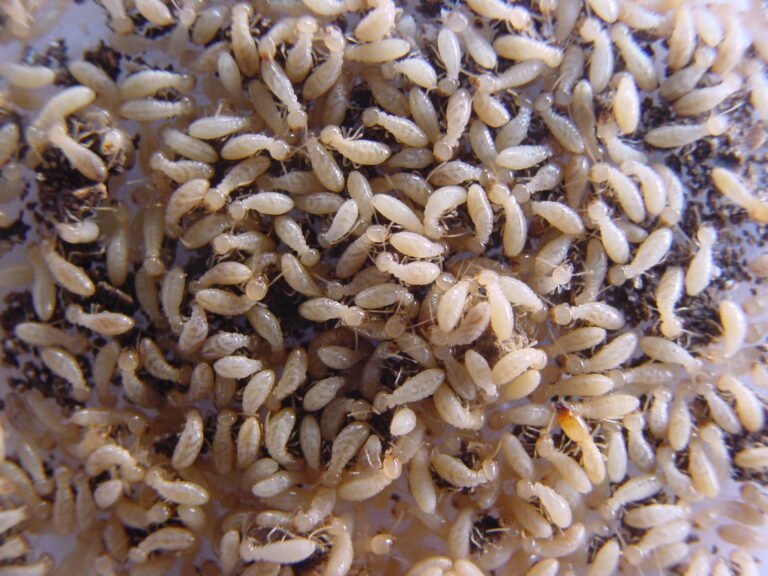
Who are termites?

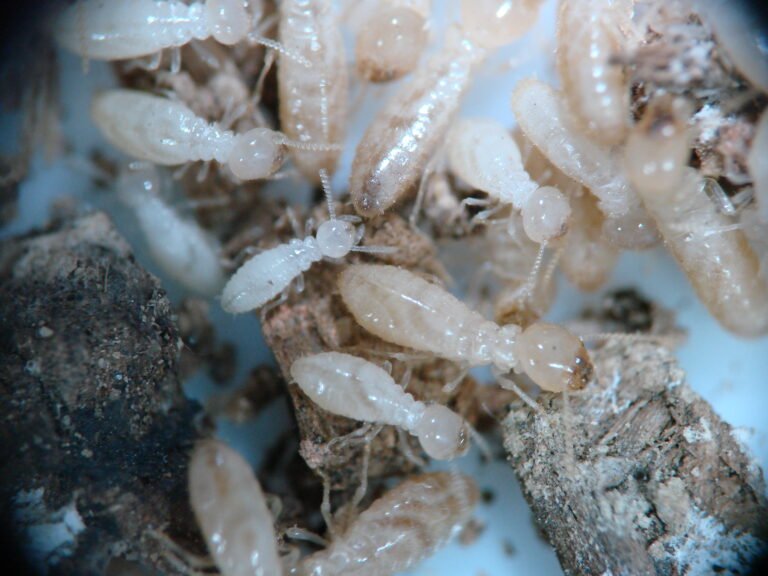
The way of life of termites
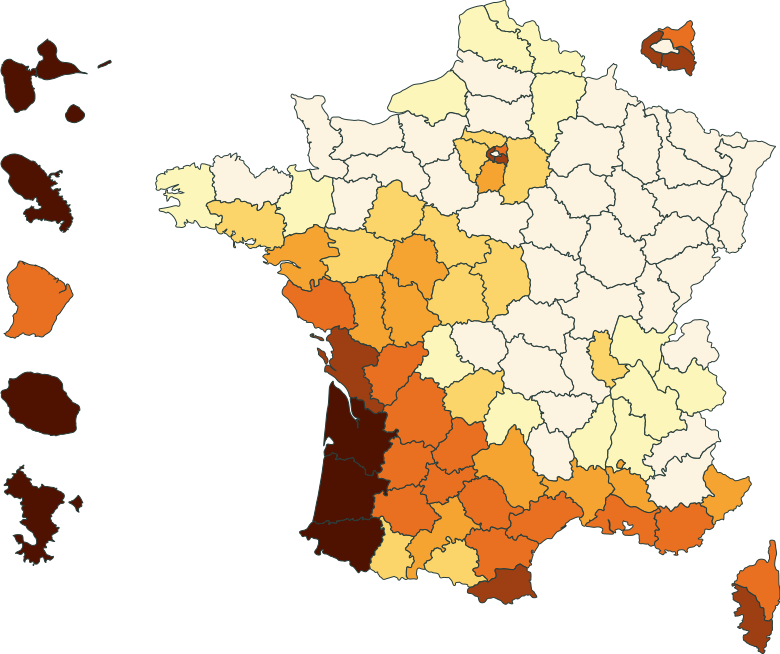
Termites are spreading in Metropolitan France and in the DROMs
Mandatory termite diagnosis
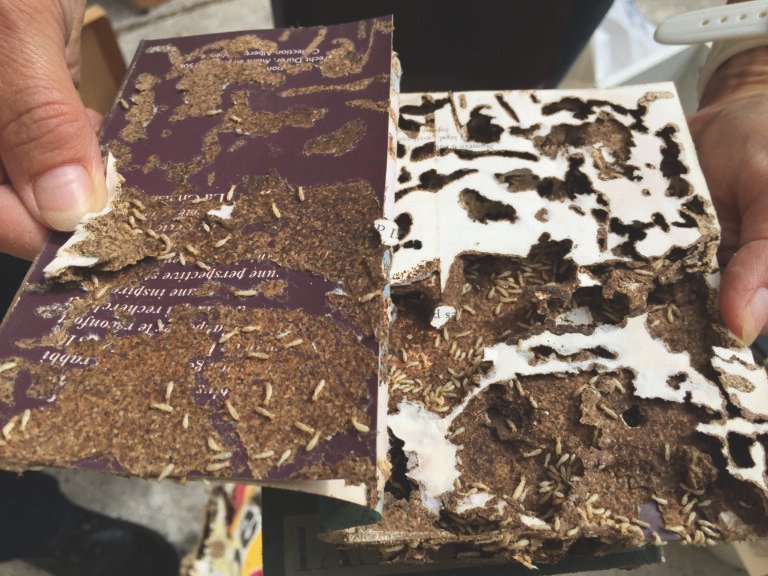
What do termites eat?
Contact the nearestSentri Tech termite treatmentnear you
We know each of our partner applicators.
They have been selected and trained by SENTRI TECH and are regularly audited.